Propagation of grapes from cuttings is one of the most reliable ways to obtain healthy, true-to-type planting material. But for good rooting in spring, it is essential to properly harvest, treat, and store the cuttings through the winter.
When to Harvest Cuttings
The best time to harvest is after leaf fall, when the grapevine's vegetative season has ended and the canes are mature.
Roughly, this is late October to mid-November (before persistent frosts set in).
The optimal temperature for harvesting is between +2 to –3°C. At this time, the canes are still flexible and the plant has already entered dormancy.
If you wait until hard frosts, the wood will become brittle and the cuttings may freeze.
How to Choose the Right Cane
Select one-year-old, matured shoots that have produced fruit this year.
The cane must be:
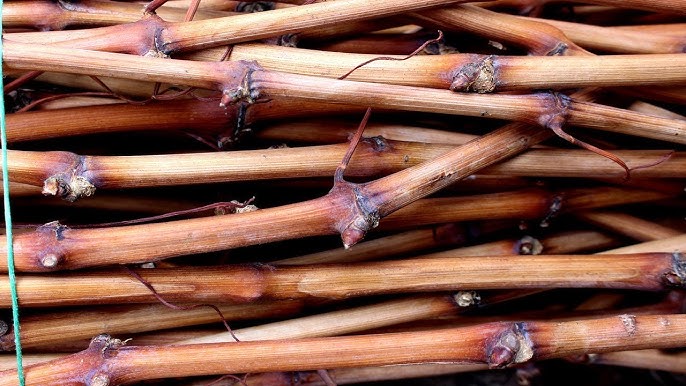
▪️ straight, with no damage, cracks or signs of disease;
▪️ 8–10 mm in diameter (about the thickness of a pencil);
▪️ well-ripened with brown wood;
▪️ internodes of medium length (not too short or too long).
Do not use thin, greenish, or overly vigorous shoots—they root poorly.
Preparation and Cutting of Sticks
After selecting the canes, cut them into sections 35–45 cm long with 3–4 buds each.
✔️ Proper Cuts:
▪️ Top cut—straight, 1.5–2 cm above the bud;
▪️ Bottom cut—angled, just below the bottom bud.
This will make it easy to orient the cutting during planting (top vs. bottom).
💧 Soaking:
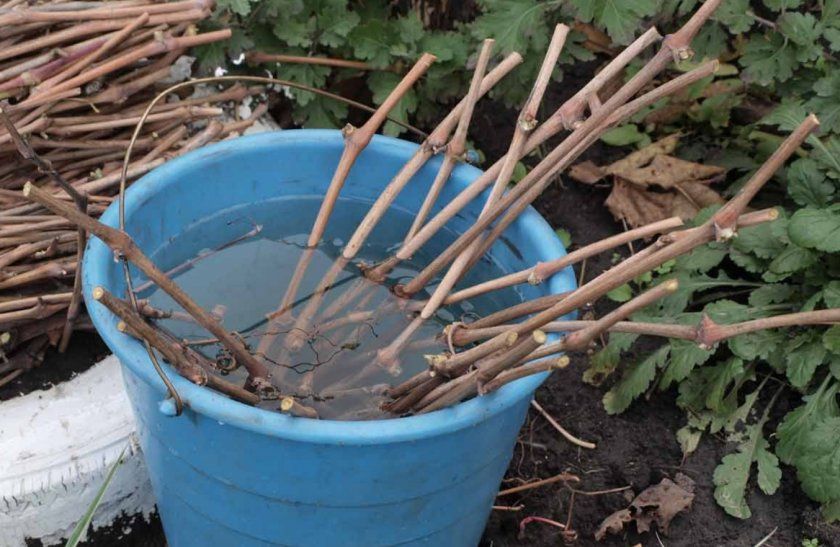
Before storage, immerse the cuttings in water for 12–24 hours to saturate them with moisture and prevent drying out.
🦠 Treatment:
To protect against fungal diseases, dip the cut ends in a 1% copper sulfate solution or dust them with wood ash.
How to Properly Store Cuttings
The main task is to keep the cuttings fresh, avoiding drying out or rotting until spring.
There are several proven methods 👇
In the Refrigerator
Good for small quantities of cuttings.
1️⃣ Wrap them in moist cloth or sphagnum moss.
2️⃣ Place in a plastic bag with a few holes for ventilation.
3️⃣ Store in the vegetable drawer at +1…+4°C.
Check the cuttings monthly—if they're dry, moisten them a bit; if they're steamy, air them out.
In a Cellar or Basement
The classic option for larger amounts.
1️⃣ Place the cuttings in a box and cover them with moist sand or sawdust.
2️⃣ Optimal temperature: 0 to +3°C; air humidity: 70–80%.
3️⃣ Check regularly for mold.
If the temperature rises, the cuttings may sprout prematurely—move them to a cooler spot if needed.
In the Garden Under Snow (for southern regions)
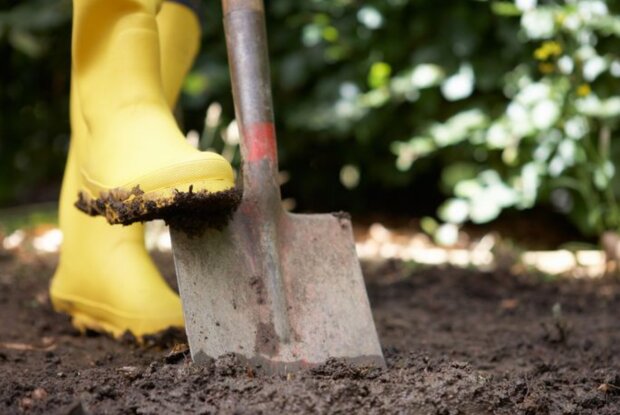
1️⃣ Dig a trench 30–40 cm deep.
2️⃣ Place the cuttings, wrapped in plastic film or burlap, inside.
3️⃣ Cover with soil and a thick layer of snow.
This method provides natural humidity and a stable temperature throughout the winter.
How to Check the Cuttings in Spring
Before planting, take out the cuttings and check:
▪️ A fresh, greenish, moist cut—means alive;
▪️ Brown or dry cut—means dead.
You can also submerge the lower end in water: after 1–2 days, living cuttings will develop tiny white roots.
💡 Before planting, soak the cuttings in clean water for 2–3 days, or in a rooting stimulant (such as heteroauxin or Kornevin).
Common Mistakes During Harvesting
🚫 Using immature canes—they rot in storage.
🚫 Storage in warm conditions—the cuttings may sprout too early.
🚫 Lack of ventilation—leads to mold.
🚫 Drying out—the bark shrivels and the cutting loses viability.
🌿 Tip:
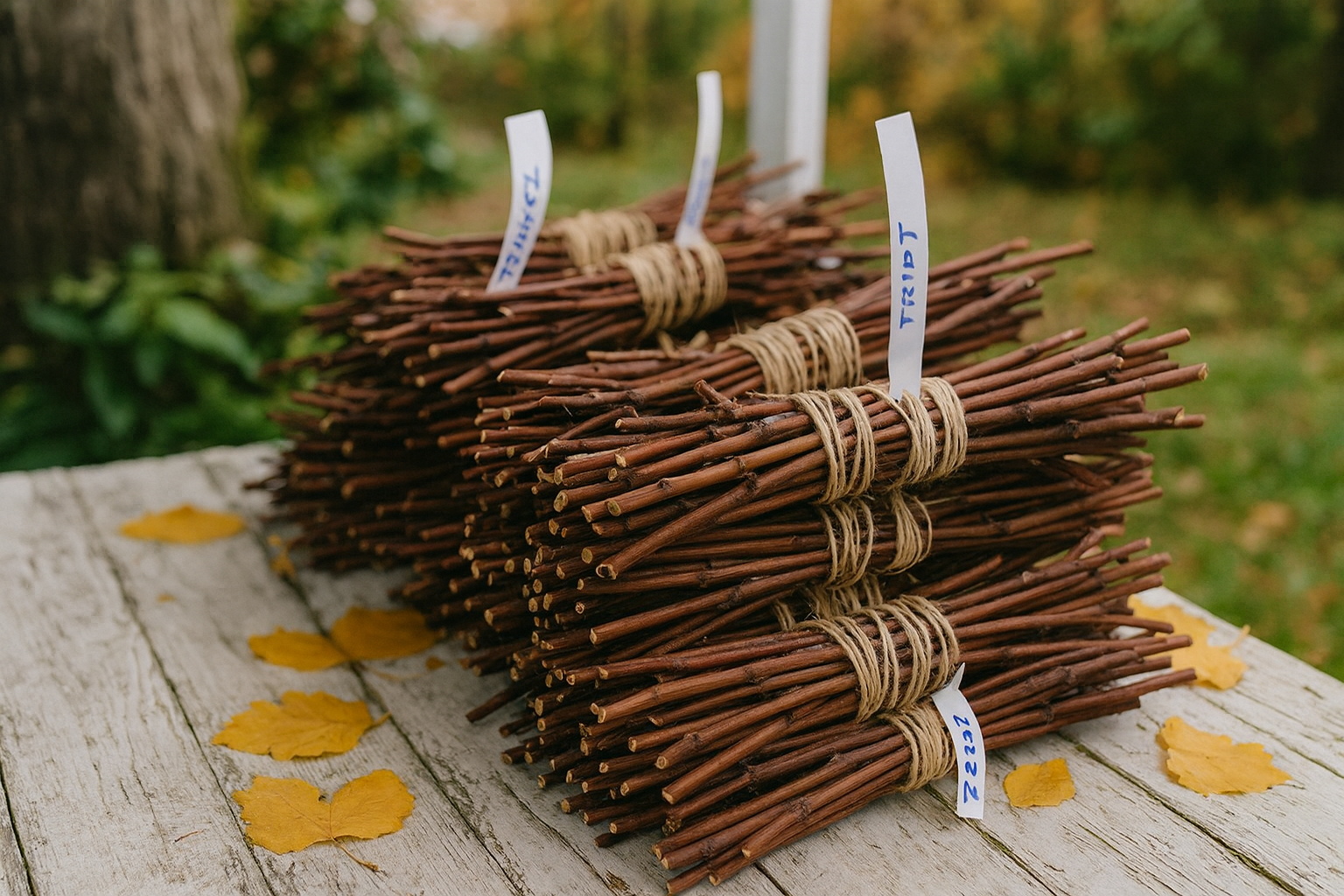
Label the cuttings right after cutting according to variety or mother vine. This saves time in the spring and keeps variety selection accurate.
To keep cuttings from drying out, store them not just in a humid medium but in a container with a microclimate, for example, a plastic crate with a lid and air holes.
Proper harvesting and storage of grape cuttings ensure that you get healthy, vigorous seedlings in spring that will grow quickly and maintain all their varietal traits.


.png)