Spring is one of the most important periods in garden care. It is at this time that the foundation for the health of trees and the future harvest is laid. If you miss the first treatments, pests and disease pathogens will quickly become active, and fighting them during the season will be much more difficult.
The first spring orchard treatment is a set of preventive measures that help destroy overwintering stages of pests, fungal infections, and bacteria before the start of active vegetation.
When to carry out the first spring orchard treatment
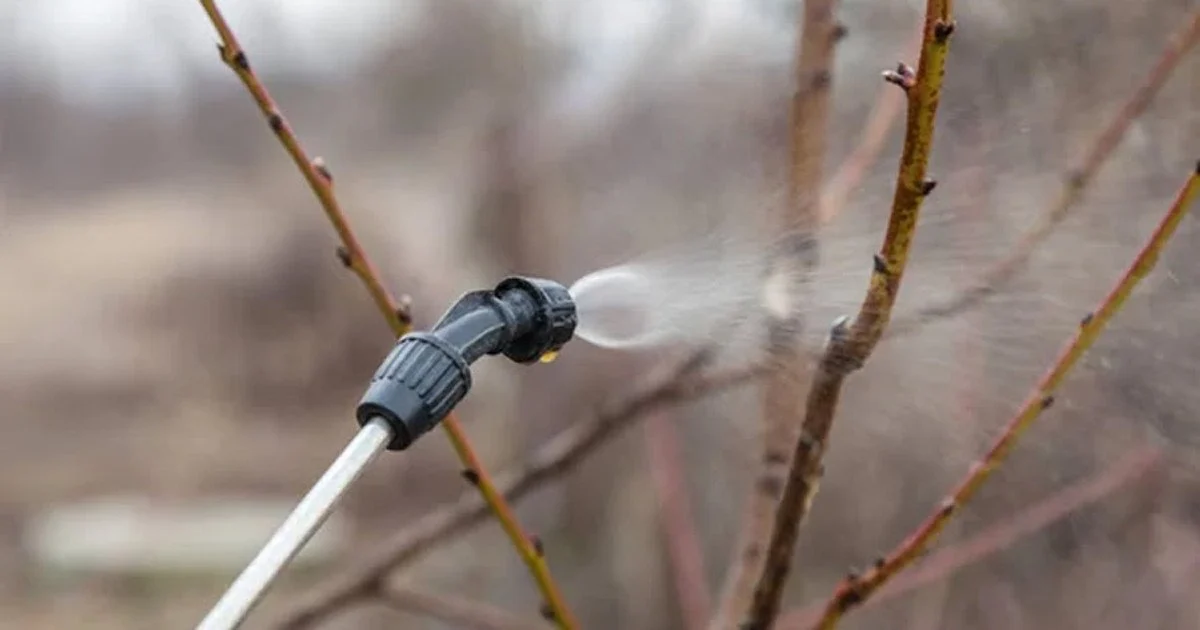
The first treatment is carried out in early spring, before bud break, when the trees are still dormant. Usually, this is in March or early April in colder regions.
Main conditions for treatment:
▪️ air temperature from +4 to +8 °C and above
▪️ dry, windless day
▪️ no rain for 24 hours after treatment
At this time, most pests are still in the overwintering stage under the bark, in cracks, or in the buds.
Why it is important to treat the orchard in early spring
In the bark of trees, fallen leaves, and soil, the following overwinter:
▪️ aphid eggs
▪️ mites
▪️ scale insects
▪️ leafrollers
▪️ scab pathogens
▪️ moniliosis
▪️ leaf spots
▪️ peach leaf curl
If you destroy them before the start of vegetation, you can significantly reduce the number of treatments during the summer. Early treatment is, in fact, prevention of future problems.
Preparing the orchard before spraying
Before treatment, it is advisable to carry out some preparatory work.
1️⃣ Sanitary pruning
Remove:
▪️ dry
▪️ broken
▪️ diseased branches
This reduces the amount of infection in the orchard.
2️⃣ Bark cleaning
On old trees, you often find:
▪️ dead bark
▪️ moss
▪️ lichens
These are carefully removed with a brush.
3️⃣ Cleaning under the trees
It is necessary to remove:
▪️ fallen leaves
▪️ mummified fruits
▪️ dry branches
This is where fungal infections often overwinter.
What to treat the orchard with in early spring
There are several effective options for the first treatment.
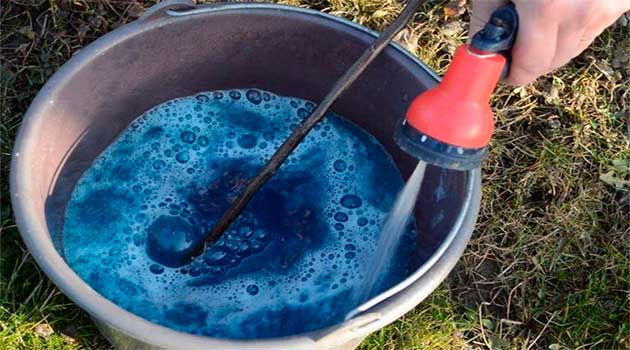
🔸 Bordeaux mixture
One of the oldest and most effective fungicides.
Used against:
▪️ scab
▪️ moniliosis
▪️ leaf curl
▪️ leaf spots
For the first treatment, a 3% solution is used.
Approximate preparation scheme:
▪️ 300 g copper sulfate
▪️ 300 g slaked lime
▪️ 10 liters of water
Bordeaux mixture creates a protective film on the bark and buds.
🔸 Copper sulfate
This is a contact fungicide that works well against fungal diseases.
Used:
▪️ 1–3% solution
Effective against:
▪️ scab
▪️ anthracnose
▪️ leaf spots
Often used for treating:
▪️ apple trees
▪️ pears
▪️ plums
▪️ cherries
🔸 Oil-based preparations (such as "Preparation 30")
These products work a bit differently — they cover pest eggs with a thin film, blocking air access.
Destroy:
▪️ aphid eggs
▪️ mites
▪️ scale insects
▪️ psyllids
They are used before bud break.
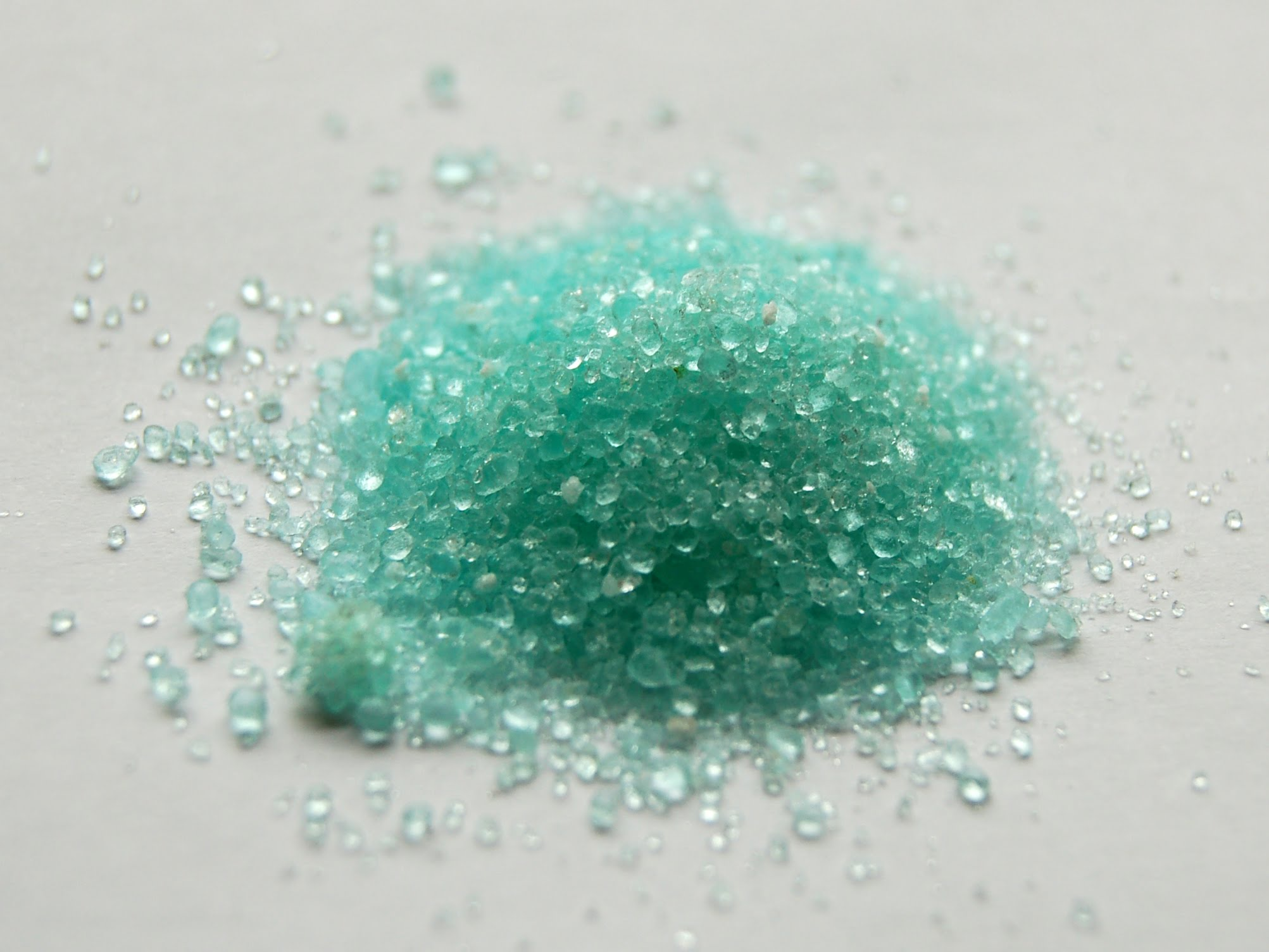
🔸 Iron sulfate
Used for:
▪️ controlling moss and lichens
▪️ preventing fungal diseases
Applied as a 3–5% solution.
It also partially helps destroy overwintering stages of pests.
Can preparations be mixed
Not all preparations can be mixed together. For example:
▪️ Bordeaux mixture is not mixed with other preparations
▪️ oil-based products are not combined with copper-based ones
The best scheme:
1️⃣ First the fungicide (Bordeaux or copper sulfate)
2️⃣ After 5–7 days — the preparation against pests
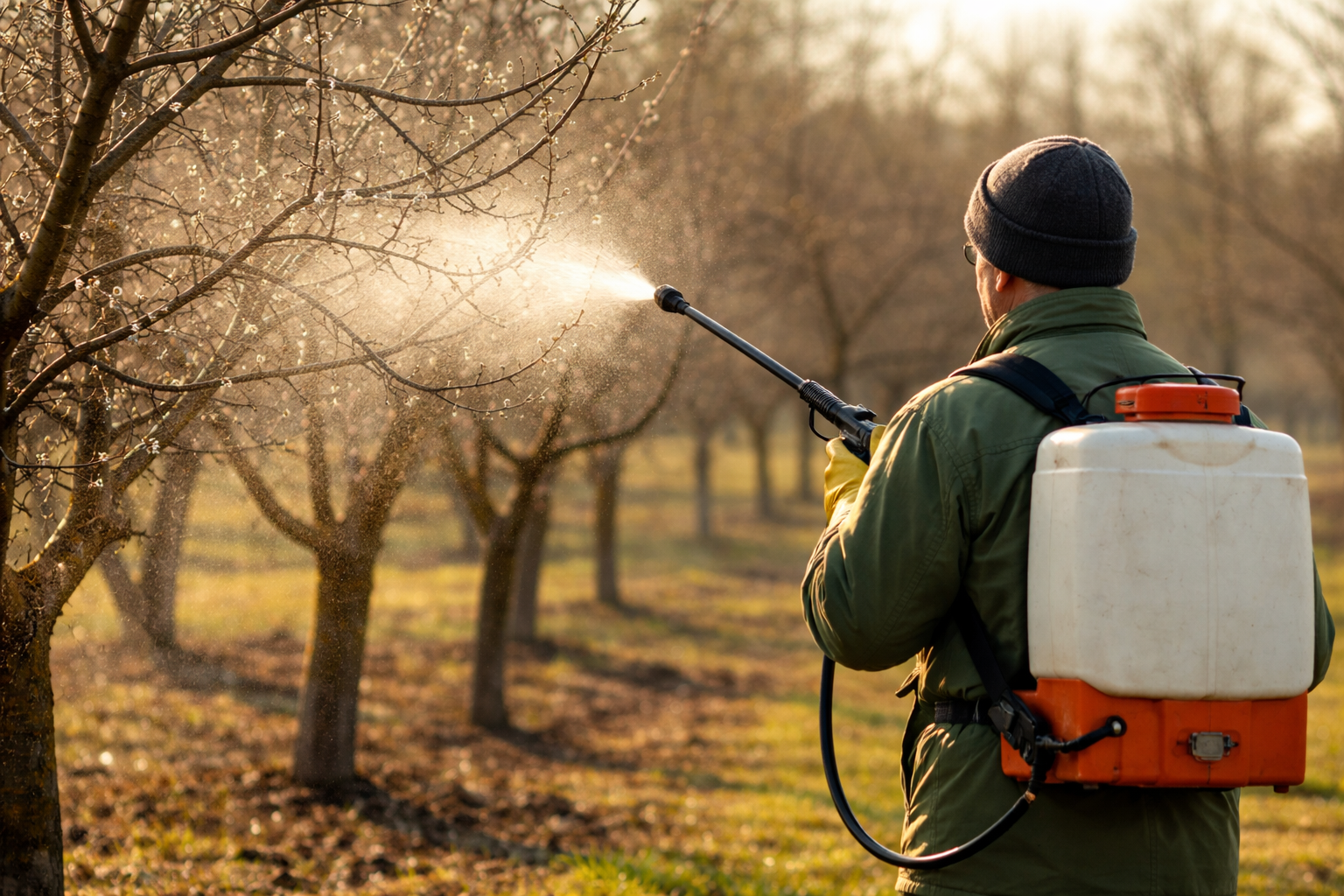
How to properly spray trees
To make the treatment effective, several rules must be followed.
Spray:
▪️ the trunk
▪️ main branches
▪️ young shoots
▪️ buds
The solution should thoroughly wet the entire surface of the bark, but not run off in strong streams. It is also advisable to treat the soil in the trunk circle, where pests may also overwinter.
Common mistakes by gardeners
❌ Treatment too late
If the buds have already opened, concentrated preparations can harm the plant.
❌ Low concentration
Weak solutions do not destroy overwintering stages of pests.
❌ Treatment before rain
The preparation will simply be washed away.
❌ Spraying only branches
Pests often hide in the bark and under the tree.
When to carry out subsequent treatments
After the first spring treatment, several more stages are usually carried out:
- "Green cone" stage
- Before flowering
- After flowering
This helps to fully control pests and diseases.
The first spring orchard treatment is one of the most important stages of tree care. It allows you to destroy most pests and disease pathogens before the start of active vegetation.
If done correctly and on time, the orchard will be much healthier, and the number of treatments during the season can be significantly reduced.
✅ Tip: plan all work in the orchard in advance. Keeping records of treatments, fertilization, and pruning helps not to miss important stages of plant care.