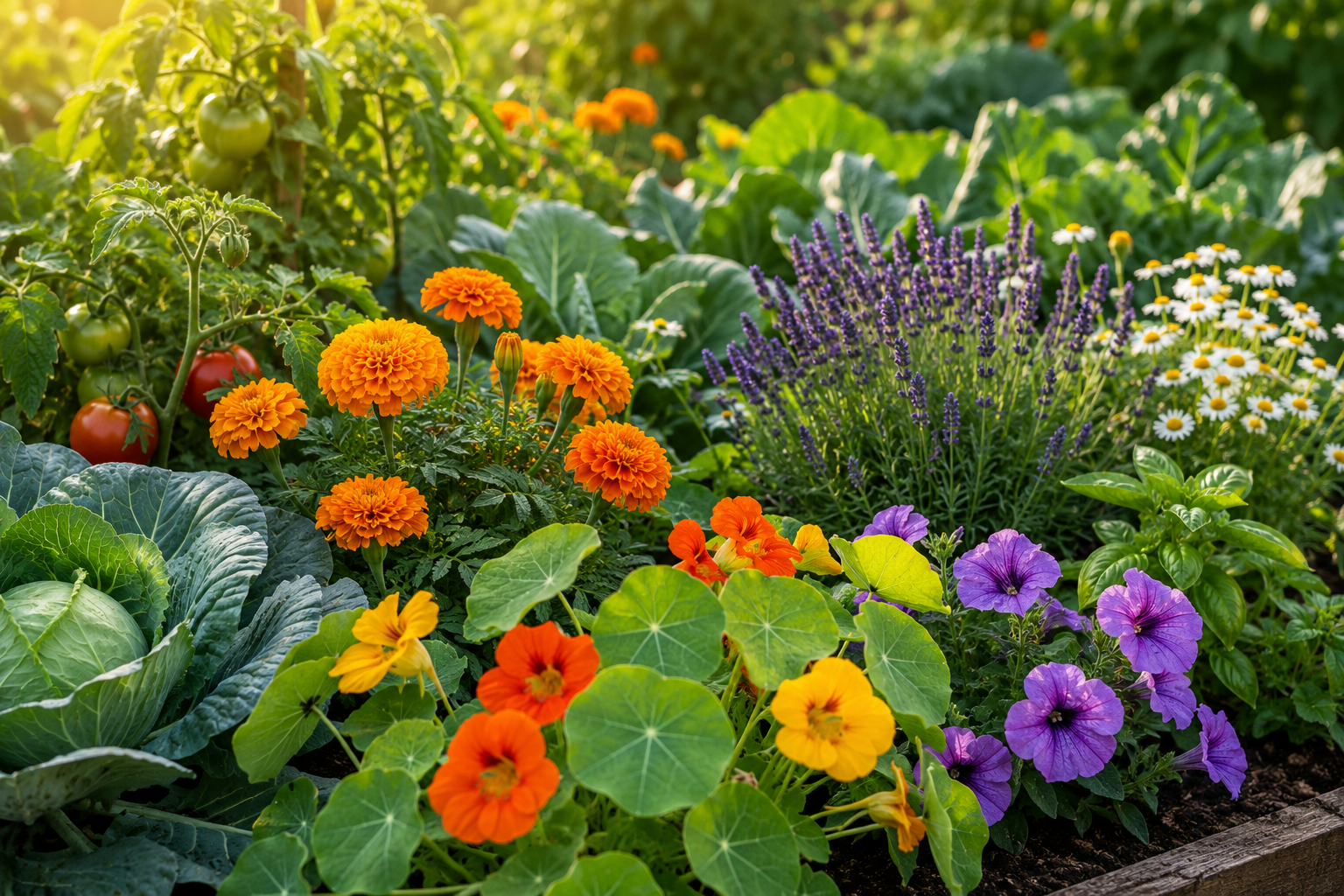
Anyone who has ever grown tomatoes or cabbage knows how relentless uninvited guests can be—aphids, whiteflies, Colorado potato beetles, or nematodes. The first impulse is to grab the sprayer. But there is another way, ancient and reliable: plant flowers near your beds that naturally repel pests.
Companion planting is not just a folk whim. There is clear biology behind it. Many flowering plants release essential oils, phytoncides, or specific volatile compounds through their leaves, stems, and roots. These substances either disorient insects, mask the scent of neighboring crops, or directly poison harmful guests. At the same time, these flowers attract predatory insects—parasitic wasps, ladybugs, lacewings—that feed on pests.
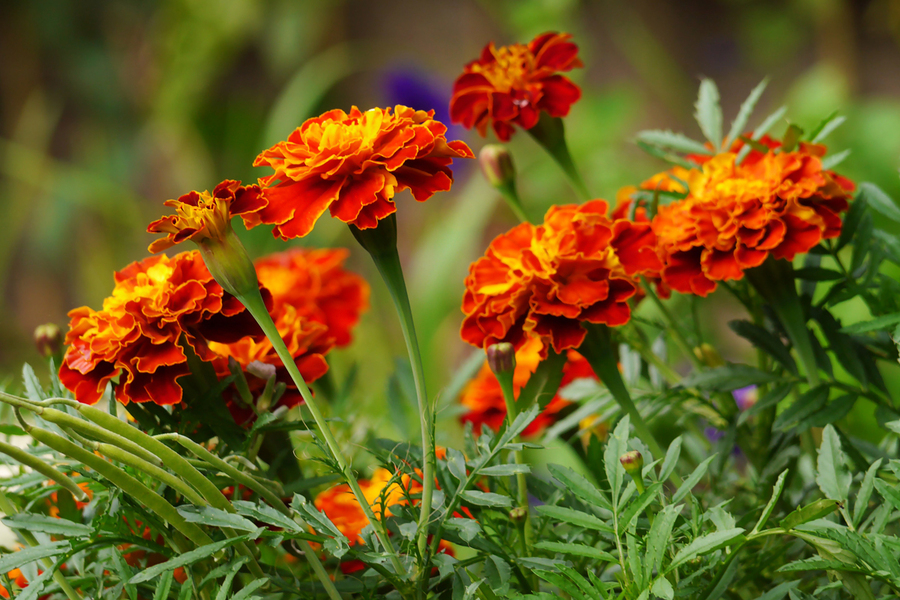
Marigolds
No flower has earned the reputation of a protector quite like marigolds (Tagetes). Their roots release thiophenes into the soil—compounds toxic to nematodes. These microscopic worms damage root crops, eggplants, tomatoes, and peppers. But if you plant marigolds nearby or even as dense borders between rows, the nematode population drops significantly in just one season.
Besides their underground work, marigolds repel whiteflies, aphids, and some leaf beetles with their strong scent. They are best planted next to tomatoes, peppers, cucumbers, and potatoes. The distance should be 20–30 centimeters between marigold bushes and vegetable rows. Place them not only along the edges of the bed but also inside—in small clusters.
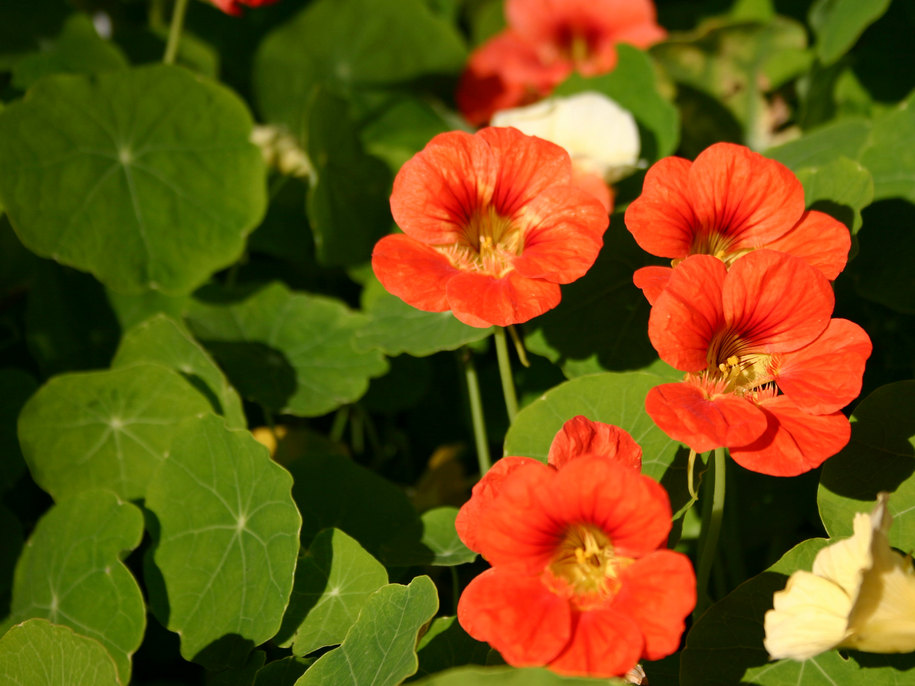
Nasturtium
Nasturtium (Tropaeolum majus) is a sacrificial plant in the best sense. It attracts aphids even more than their favorite cultivated plants. Gardeners use this on purpose: nasturtium is planted as a "trap plant" around cabbage, broccoli, and squash beds. Pests flock to the flowers and leaves of nasturtium, leaving garden crops alone.
At the same time, nasturtium emits mustard oil that repels aphids from neighboring plants. It sounds contradictory—both attracting and repelling at once. But it makes sense: nasturtium creates a concentrated "zone of attraction" where pests gather and can be easily destroyed or fall prey to predators. Plant nasturtium under fruit trees and next to legumes—the effect will be noticeable.
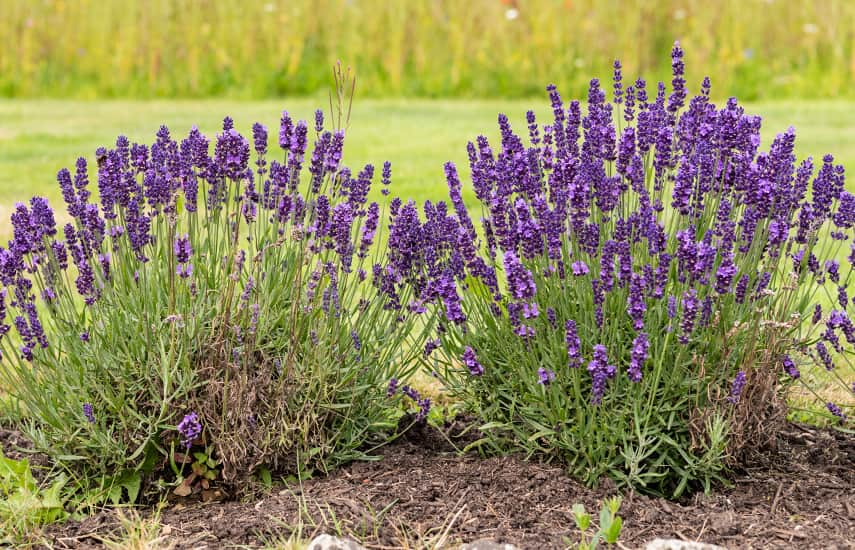
Lavender and Other Fragrant Allies
Lavender is a whole security system in one plant. Its essential oils repel moths, aphids, mites, and even rodents. Next to cabbage, lavender confuses the cabbage white butterfly—whose caterpillars do great harm. However, lavender is a perennial and demanding plant: it loves sun and well-drained soil. In home gardens, it is best planted in permanent clumps along garden paths.
Pyrethrum, or Dalmatian chrysanthemum (Tanacetum cinerariifolium), deserves special attention. Its flower heads produce natural pyrethrin—one of the oldest organic insecticides. Simply having this plant near your beds creates a certain chemical barrier for various insects. Pyrethrum is especially effective against aphids, thrips, and leafhoppers.
Catnip (Nepeta) repels aphids and ants, basil is an excellent partner for tomatoes as it repels tobacco thrips. Alyssum attracts tiny parasitic wasps and hoverflies, whose larvae destroy aphids. Together, these plants form a living network of protection, which only becomes stronger each year.
Petunia and Zinnia
Petunia is an unexpected but effective protector. Its sticky glandular hairs on the stems literally "trap" small pests, and its specific scent repels aphids, pea weevils, and some bugs. Plant petunias between rows of beans and peas—the results will surprise you.
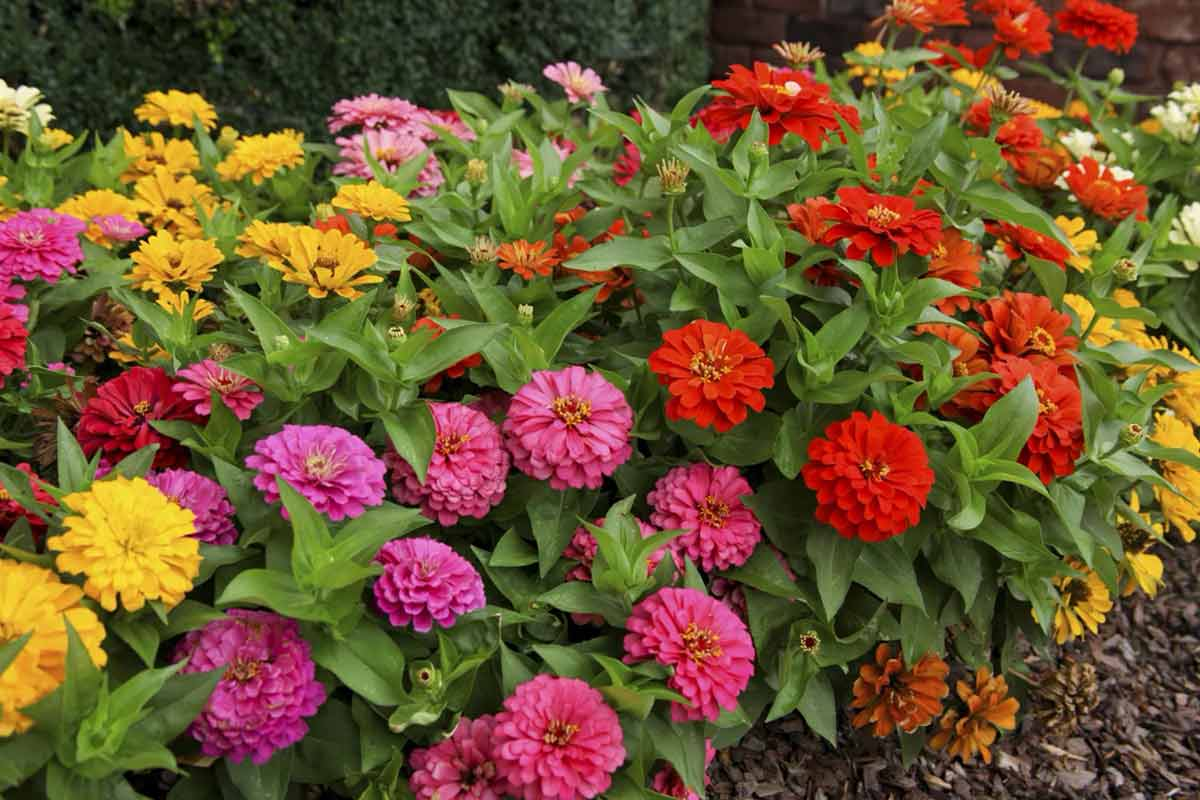
Zinnia attracts pollinating butterflies and predatory wasps that eat caterpillars. Plant it near tomatoes and peppers—you will improve pollination and attract natural enemies of pests at the same time.
Practical Placement Tips
The biggest mistake gardeners make is planting repellent flowers as a solid border only along the edges of the plot. Pests easily bypass such barriers. The mixing principle is much more effective: repellent flowers should be evenly distributed throughout the garden area. Alternate rows of vegetables with rows of flowers, break up plantings into small clusters.
Quantity also matters. For marigolds to have a noticeable effect against nematodes, they should cover at least 10–15% of the total bed area. For protection against flying pests, one flower bush per 2–3 square meters of the garden is enough.
Don’t forget about timing. Plant repellent flowers at the same time as your main crops or even a week or two earlier. The plant should have time to take root and start releasing active substances before pests appear en masse.
When Flowers Don’t Save the Day
It’s important to be honest: repellent flowers are not a panacea. During a massive pest outbreak, they only mitigate the situation but do not completely solve the problem. They work best as prevention, not as a cure. If there are already a hundred caterpillars on your cabbage, nasturtium will not help. But if you plant repellents every year, the pest population decreases year after year, and eventually, the garden truly becomes much healthier.
In addition, effectiveness depends on proper pairing. Not all flowers suit all vegetables. Some plants may compete for water and nutrients. For example, fennel—although it repels some pests—suppresses the growth of most garden crops and is best planted separately from the main garden.
Start small: this season, try planting marigolds among tomatoes and nasturtium along the edges of your cabbage bed. Observe. The result will convince you better than any words.



Comments (0)