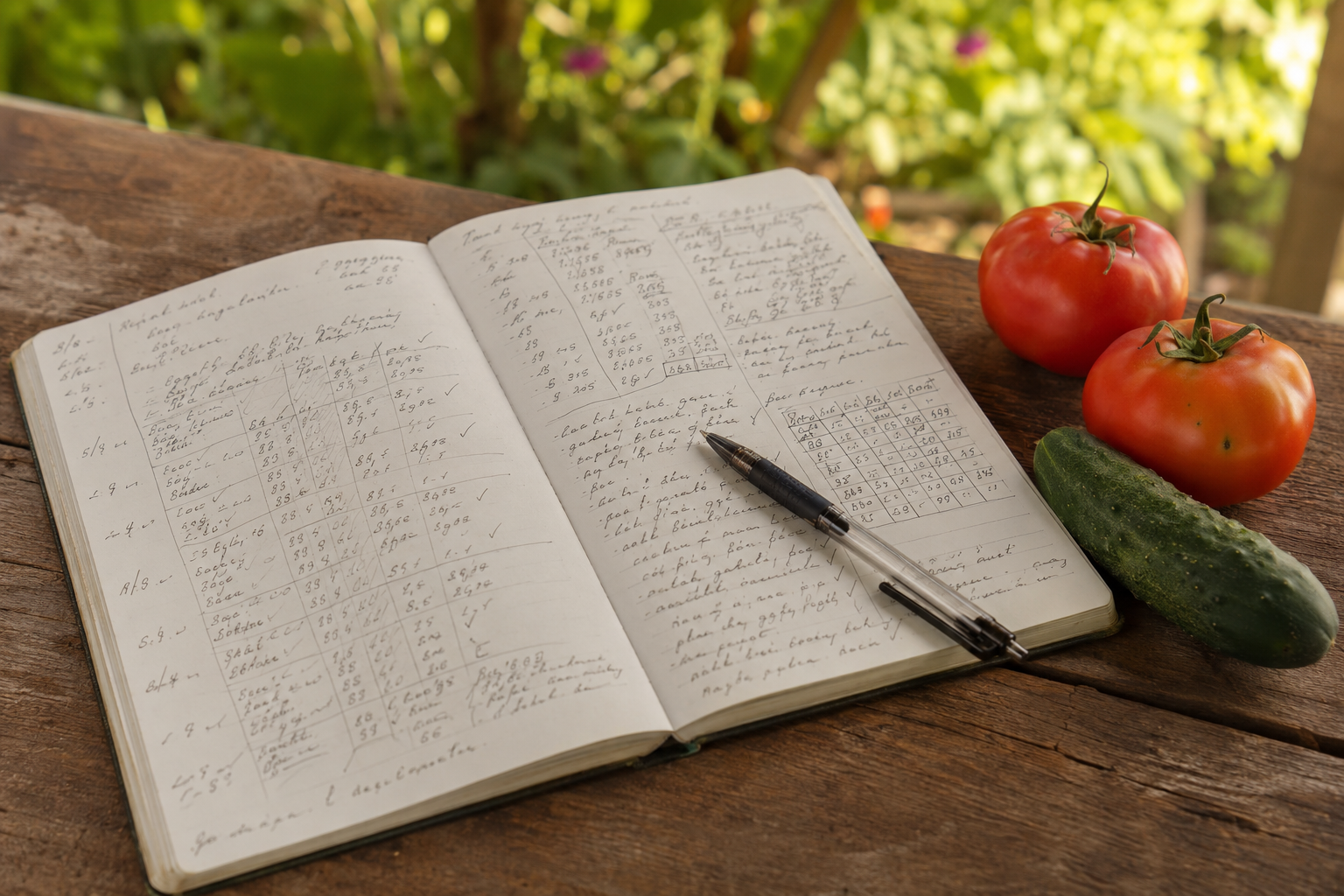
How many tomato varieties did you plant this year? And how many of them can you confidently call the most productive, tastiest, and most disease-resistant—not based on impressions, but on actual observations?
Every year, gardeners try new varieties, buy seeds recommended by friends or choose those with attractive packaging. However, by the following season it’s hard to remember which variety really performed well and which one was disappointing.
Your own variety rating helps turn "I think it was okay last year" into an understandable system that becomes more accurate every year.
Why Keep a Variety Rating
Memory Fails. After a year, usually only a general impression remains: "this cucumber variety was okay." But was it more productive than the neighboring one? Did it start fruiting earlier? Did it get sick less? Without records, it’s hard to compare varieties honestly.
Conditions Vary Every Year. Yield depends not only on the variety’s properties, but also on weather, watering, soil, fertilization, and planting dates. One season doesn't give a definitive answer. Multi-year observations help identify varieties that consistently give good results in different conditions.
It Saves Time, Money, and Space. When you know which varieties grow best on your plot, you don’t have to experiment blindly every year or allocate beds to plants that have already shown weak results.
What to Record
The rating doesn’t have to be complicated. It’s enough to record a few key indicators for each variety:
1️⃣ Variety name and seed supplier. The same variety from different suppliers can differ in germination and seed quality.
2️⃣ Sowing or planting date and the date of the first harvest. This way you’ll know the actual earliness of the variety in your conditions, not just as stated on the package.
3️⃣ Yield. This can be counted from a single plant, bush, or a linear meter of the bed. The main thing is to use the same unit of measurement for all varieties of the same crop.
4️⃣ Taste qualities. This evaluation will be subjective, but it’s important, especially if you value not just the quantity of the harvest.
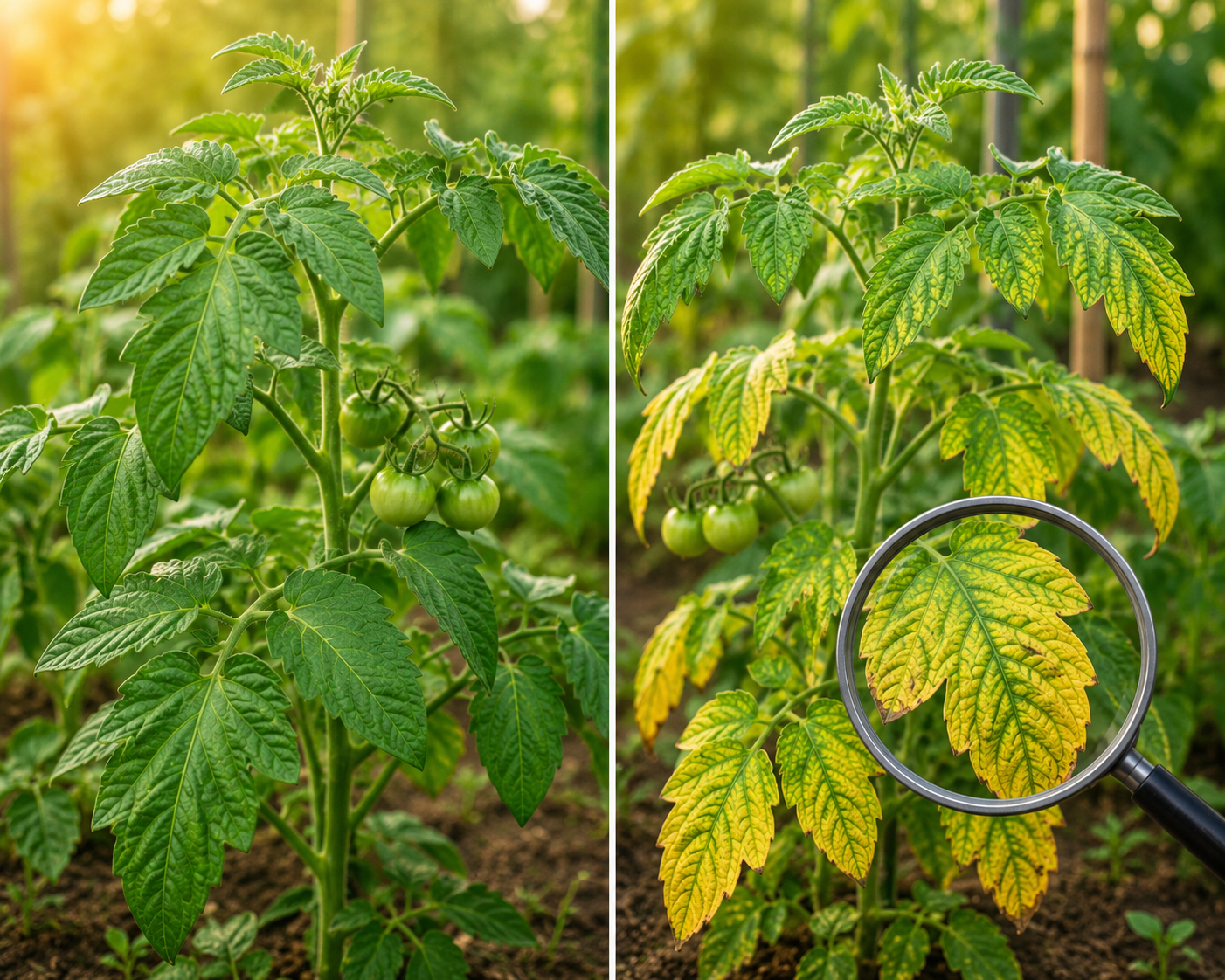
5️⃣ Disease and pest resistance. Note whether there were problems and how severe they were.
6️⃣ Growing features. For example, need for additional staking, tendency of fruits to crack, or plant sensitivity to irregular watering.
7️⃣ General rating. Rate the variety on a 5- or 10-point scale to quickly compare results even after a few years.
How to Organize Records
The format isn’t as important as regularity. You can keep a rating in several ways:
▪️ in a regular notebook;
▪️ in an Excel or Google Spreadsheet;
▪️in the SmartFields app.
In SmartFields, you can store notes about plants and varieties, record important dates, care features, problems during the season, and add photos. When harvesting, record the amount, taste impressions, and condition of the plant. This way, all observations will stay in one place and won’t be lost before the next season.
It’s helpful to photograph not just the finished harvest, but also the plants at different growth stages. After a year or two, such photos will help you recall details that may not have been recorded in written notes.
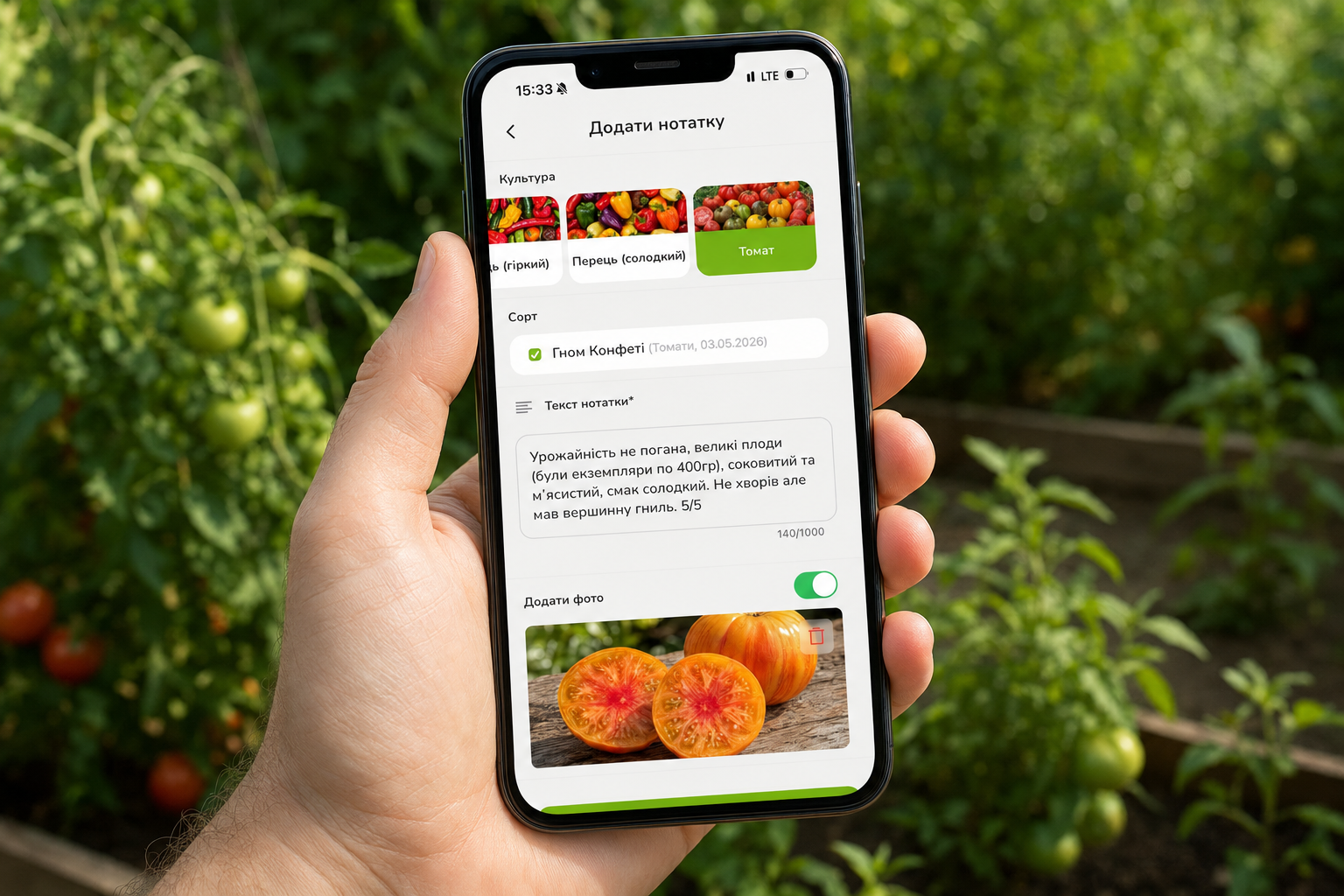
The main rule is to record information immediately, not to postpone it for "later." It’s most convenient to do this right during the harvest: such a note takes just a minute.
How to Assess Results in a Few Years
One season only provides a preliminary idea of a variety. The real value of the rating comes after 2–4 years, once enough comparison data accumulates.
You’ll be able to see:
▪️ which varieties consistently yield good harvests in varying weather;
▪️ which fruit well only in certain conditions;
▪️ which get diseases more often or need more care;
▪️ whether a variety is worth the space compared to others;
▪️ which varieties to keep and which to remove for next year.
Sometimes it turns out that the familiar "favorite" variety is inferior to new ones in yield, taste, or resistance—simply because no one compared them using the same criteria before.
Yield rating isn’t unnecessary bureaucracy but your personal gardening experience database. By spending a few minutes making notes during the harvest, after a few seasons you’ll know for sure what’s worth planting on your plot.
Store your observations, photos, and variety results in SmartFields so you don’t lose important information and can plan the next season more easily.
SmartFields—your experience, gathered season after season. 🌱


Comments (0)