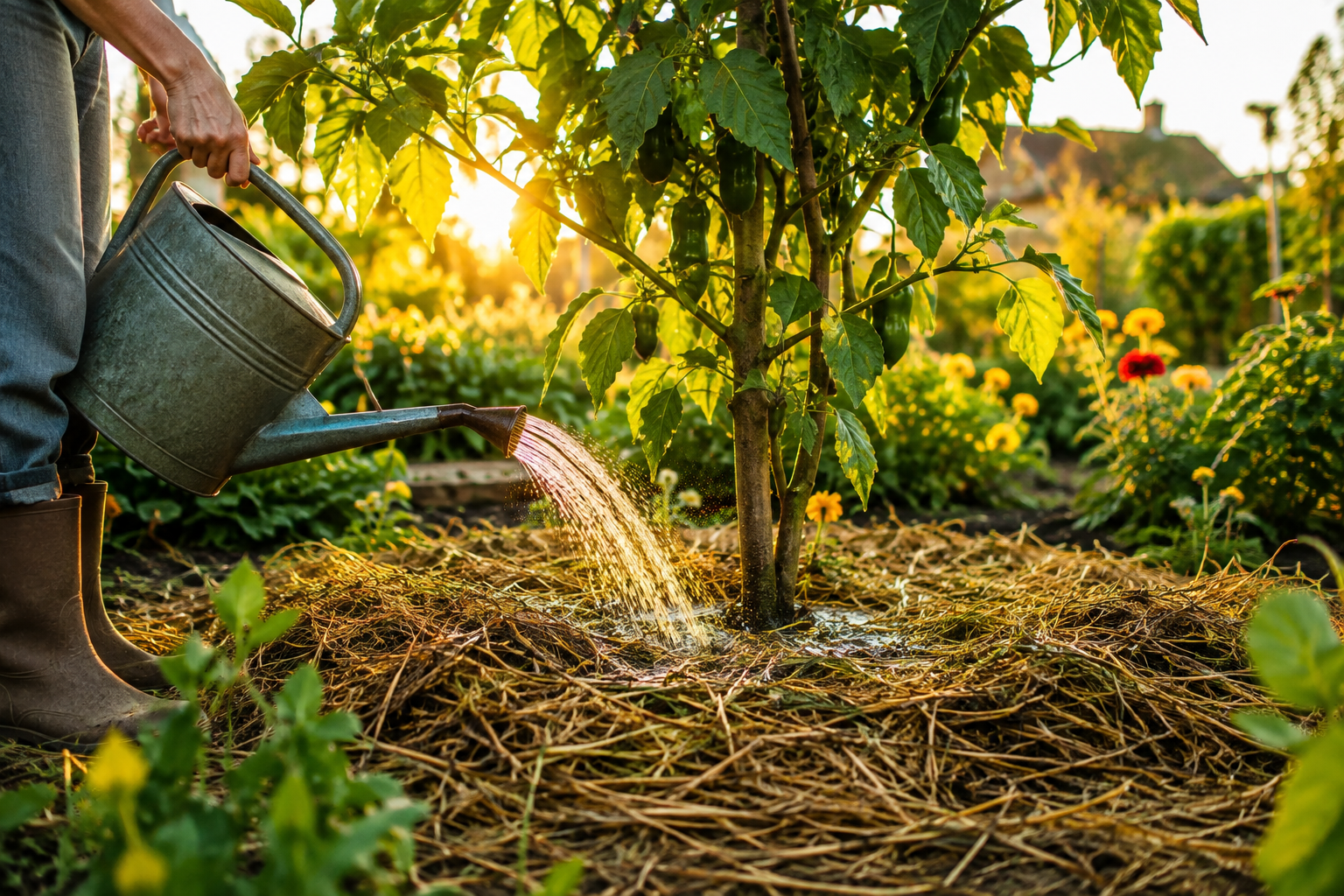
July often brings extreme temperatures exceeding +32–35 °C in Ukrainian conditions.
During this period, gardeners face a critical challenge: how to properly provide plants with moisture—not just to 'quench their thirst,' but to preserve the health of their root system. The main strategy experts recommend is the golden rule: water deeply, but infrequently.
Why is surface watering a mistake?
Many make a common mistake by watering beds in small amounts every day. Such frequent, shallow waterings moisten only the top 1–2 cm layer of soil. This leads to two negative consequences:
1️⃣ Water evaporates quickly under the scorching sun, bringing no benefit to the plant.
2️⃣ The plant begins to develop a weak, shallow root system, which becomes extremely vulnerable to even the slightest drying out of the topsoil.
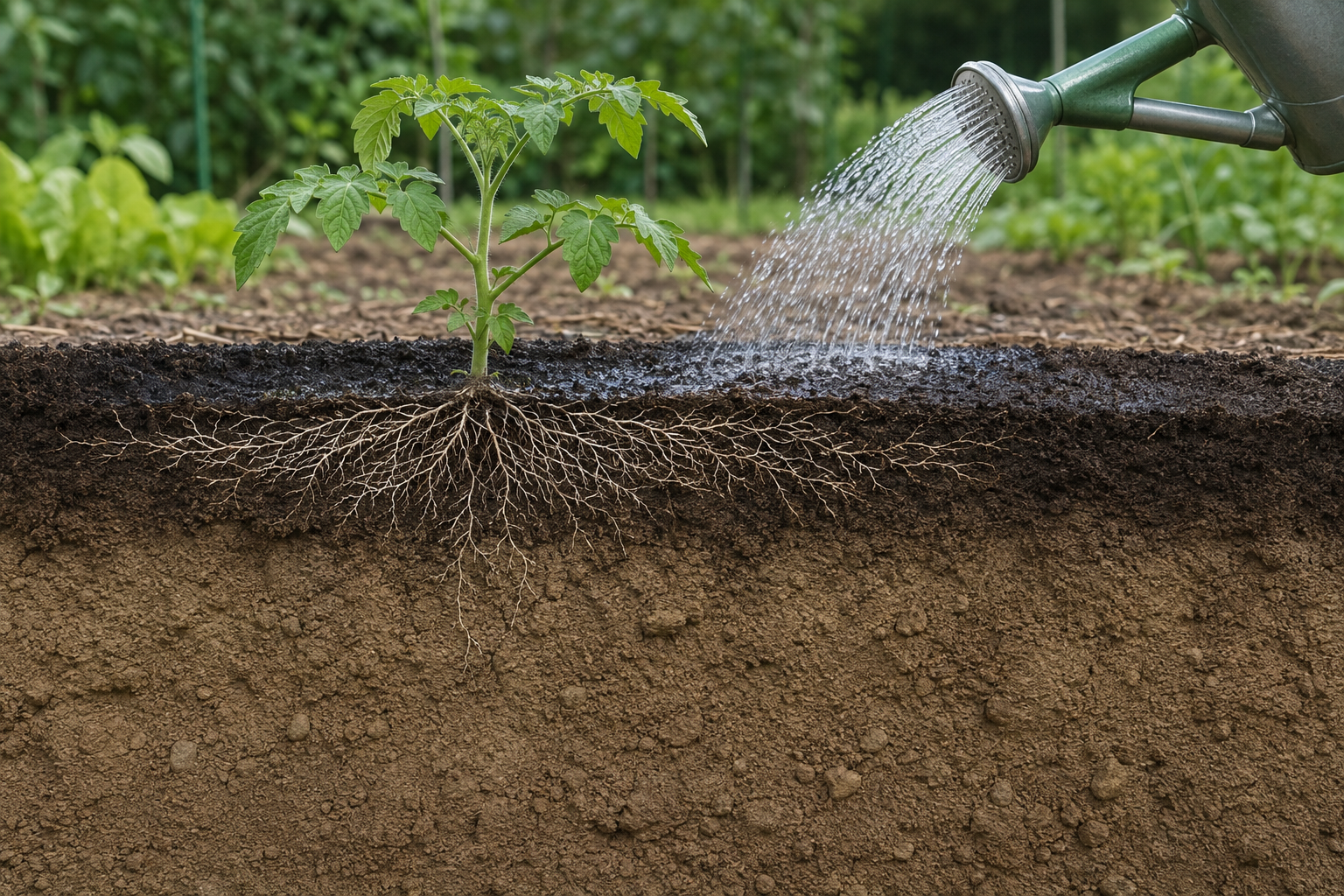
It is much more effective to soak the soil thoroughly, so that water penetrates directly to the main mass of roots.
Watering rates and depth
For truly effective irrigation, moisture should soak the ground to a certain depth depending on the crop:
▪️ Vegetable beds and lawn: water should penetrate 10–15 cm deep.
▪️ Fruit trees and shrubs: moistening should reach 20 cm.
▪️ For a mature tree: a single watering rate is 50–100 liters of water.
At the same time, water should be distributed not only under the trunk, but over the entire area covered by the tree crown.
Temperature regimen and watering time
July heat requires special attention to water temperature. The use of cold water from a well or borehole is dangerous, as it causes temperature stress on roots.
This blocks the plant's ability to absorb potassium and phosphorus—elements that are critically important in July during fruit filling.
Key recommendations:
▪️ Use only warm, settled water at +20–22 °C.
▪️ Water plants exclusively in the early morning or evening, when the sun is least active.
▪️ Cucumbers require regular watering, as lack of moisture activates the synthesis of cucurbitacin, which makes the fruit bitter.
Mulching—the best ally of watering
Even the heaviest watering loses value if moisture isn’t retained in the soil. A thick layer of organic mulch (8–10 cm) made of straw, mowed grass, or compost is a mandatory element of thermal regulation.
Mulch protects the soil from overheating, prevents the formation of a dense crust, and allows roots to breathe.
July watering techniques are not just about delivering water; they are about strategic resource management.
By following the 'deep but rare' rule, you stimulate the development of strong roots, making your garden resilient to any heat and ensuring a rich harvest.


Comments (0)