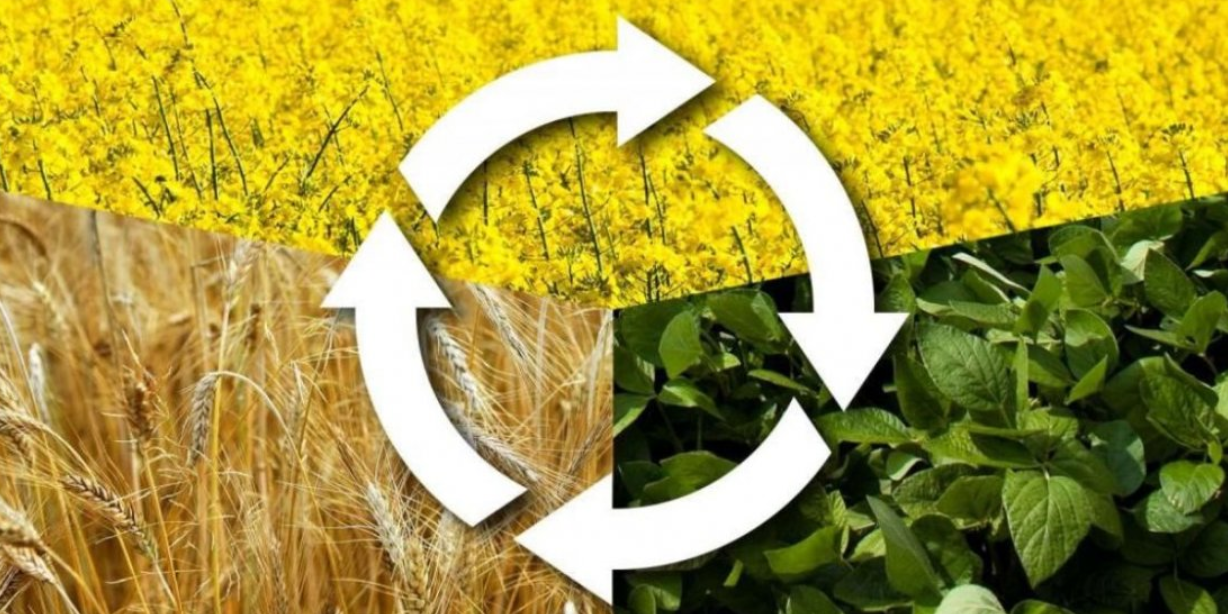
Crop rotation is the planned alternation of crops in garden beds from year to year to maintain soil fertility, reduce disease risk, and achieve consistently high yields. At first glance, it may seem complicated and "agricultural," but in reality, crop rotation is one of the simplest and most effective tools available to every gardener.
In this article, we'll look at why crop rotation works, how it affects soil health, how it helps plants, and how to organize it properly in your own plot.
What is crop rotation?
Crop rotation is a system where different crops are planted on the same plot each year according to a certain logic.
For example:
Year 1 — tomatoes → Year 2 — carrots → Year 3 — beans → Year 4 — onions.
The main idea: each plant has its own needs and weaknesses. If you plant them in the right sequence, the soil recovers and the plants grow stronger.
Why crop rotation is needed: key benefits
1️⃣ Protection from diseases and pests
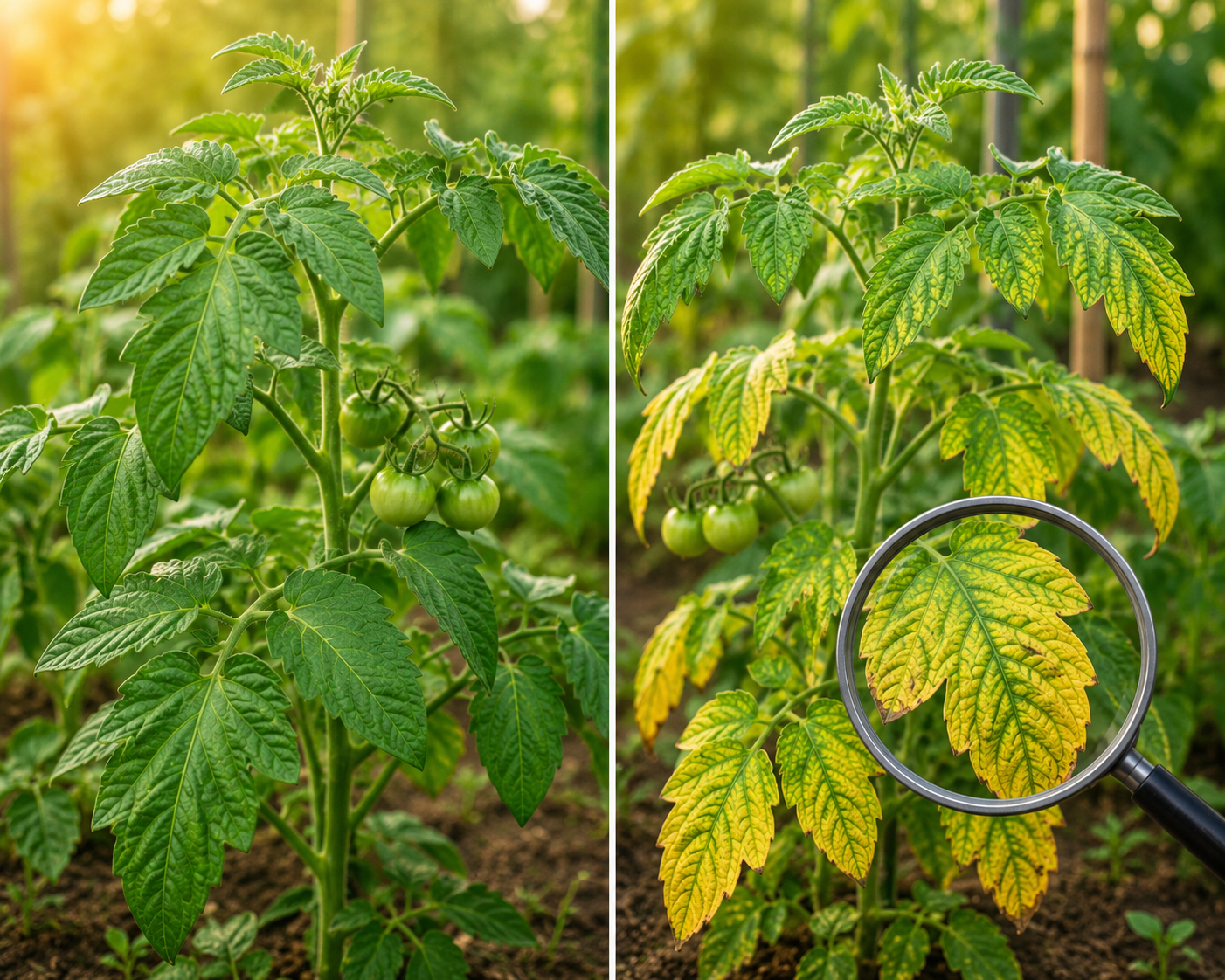
Most pathogens are "tied" to specific crops.
For example:
▪️tomatoes — late blight, cladosporiosis
▪️cabbage — clubroot
▪️carrots — carrot fly
If you plant the same crop in the same place for years, diseases accumulate in the soil. Crop rotation "breaks the cycle" of pathogens and significantly reduces risks.
2️⃣ Maintaining soil fertility
Plants "draw" nutrients differently:
▪️potatoes take up potassium actively,
▪️cabbage — nitrogen,
▪️root crops — phosphorus.
By changing crops, we prevent the soil from being depleted. Moreover, legumes (peas, beans, lupins) enrich the soil with nitrogen.
3️⃣ Fewer weeds
Proper crop rotation disrupts the weed development cycle.
For example, after green manure or cold-hardy crops, there are always fewer weeds than after heat-loving ones.
4️⃣ Better soil structure
The root systems of different plants work differently:
some loosen the soil (radish, beans),
others penetrate deeply and improve drainage (carrots, parsnips).
Thanks to this, the soil becomes looser and more permeable to water.
5️⃣ Consistently higher yields
Plants growing on healthy, restored soil get sick less, absorb nutrients better, and yield significantly more.
Main plant groups for crop rotation
To organize crop rotation properly, you need to know which group each crop belongs to:
1. Nightshades
Tomatoes, peppers, eggplants, potatoes.
❗ Return to the bed no earlier than 3–4 years later.
2. Crucifers (cabbage family)
Cabbage of various kinds, radish, turnip, arugula.
❗ Susceptible to clubroot — require maximum rotation.
3. Root crops
Carrots, beets, parsnips.
❗ Don't like organic matter "under the root", better to plant after cucumbers, squashes, or legumes.
4. Cucurbits
Cucumbers, squash, pumpkin, pattypan squash.
❗ Grow well after cabbage and legumes.
5. Legumes
Peas, beans, chickpeas, soybeans.
❗ Improve the soil and leave nitrogen behind.
6. Alliums
Onions, garlic.
❗ Good predecessors for most vegetables, but themselves require rotation of at least 3 years.
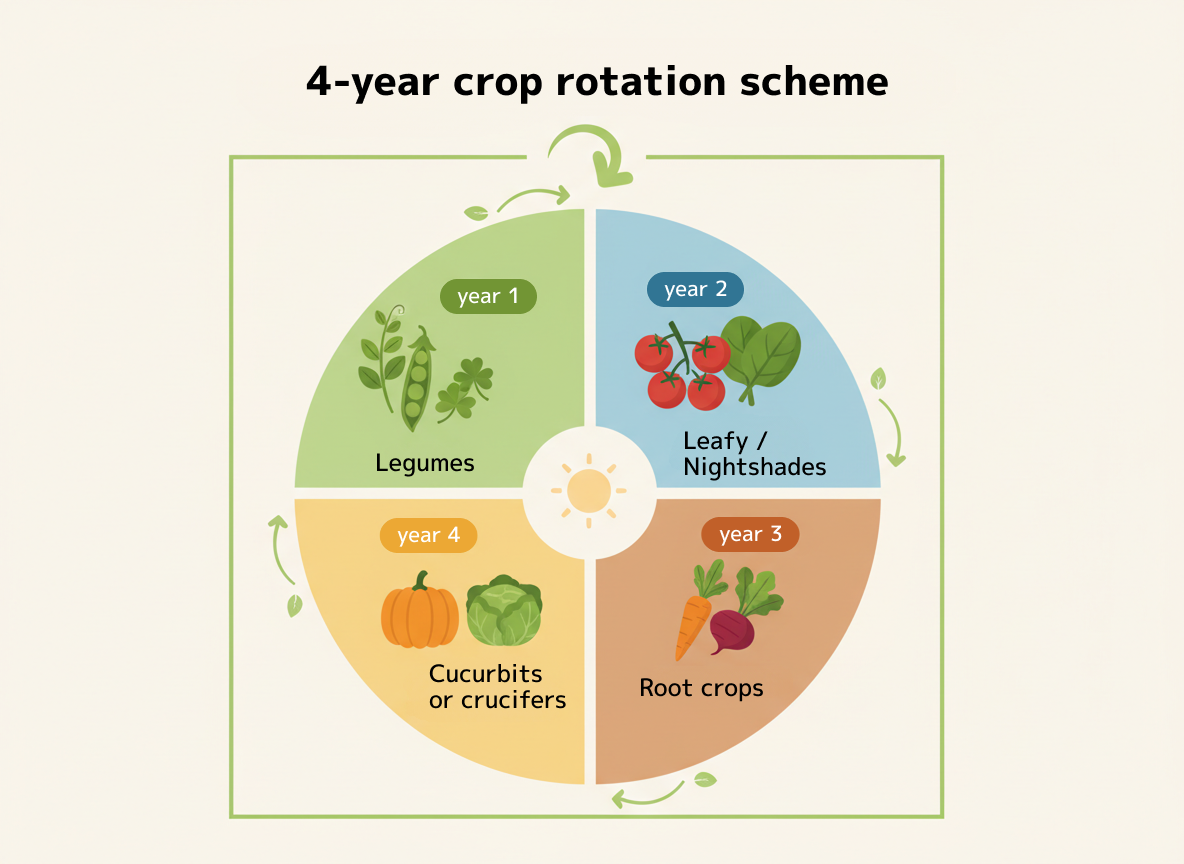
🔄 Simple 4-year crop rotation scheme (most common)
Year 1 — Legumes
Year 2 — Leafy / Nightshades
Year 3 — Root crops
Year 4 — Cucurbits or crucifers
After the 4th year, the cycle repeats.
Or another option:
1. Crucifers → 2. Nightshades → 3. Root crops → 4. Legumes / Cucumbers → repeat
Important: potatoes and tomatoes should never follow each other.
Remember a few golden rules
▪️Don't plant relatives in the same spot (tomatoes after peppers, cabbage after radish).
▪️Legumes are the best predecessors for most crops.
▪️The longer the crop rotation cycle, the better (4 years is optimal for gardens).
▪️Even in small plots, you can organize crop rotation — just divide your garden into at least 3–4 zones.
Crop rotation is not a complicated rule "for agronomists," but a practical tool that allows you to get healthy plants and abundant harvests without extra effort. By following a crop rotation plan, you help the soil recover naturally, reduce diseases, increase yields, and save on fertilizers and plant protection products.
Want it even easier? — use crop rotation in SmartFields: we’ll suggest which crops are best to plant next year in your bed 😉